
Futon à la Carte
Customize Your Futon Mattress
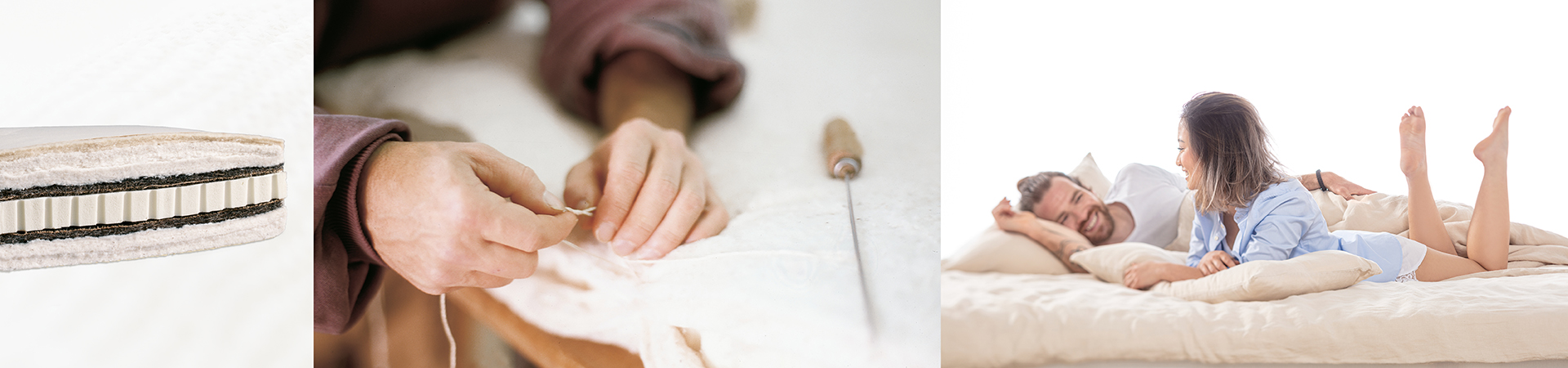
Many people initially say about futons: “They are quite firm!” That’s true – and exactly why they are often chosen. A futon consists of several layers of natural materials such as cotton, wool, or coconut. This way, the body does not sink deeply but is evenly supported. Many people notice the result automatically after a few nights: they lie more calmly, turn less, and often wake up more relaxed in the morning.
Our Products
Natural Mattress Workshop
The Natural Mattress Workshop makes this possible. You can personally assemble your own futon mattress or futon. Choose from our various tested raw materials those that suit you best. Different cover options in color or natural finish are available for your futon. By hand and stitched, we make all sizes and shapes of your self-assembled futon mattress.
Want to use your own fabrics?
No problem! We will process them for you into your very own futon. Of course, these futons also comply with dormiente’s strict standards for harmful substance control.
How to Assemble Your Futon Mattress
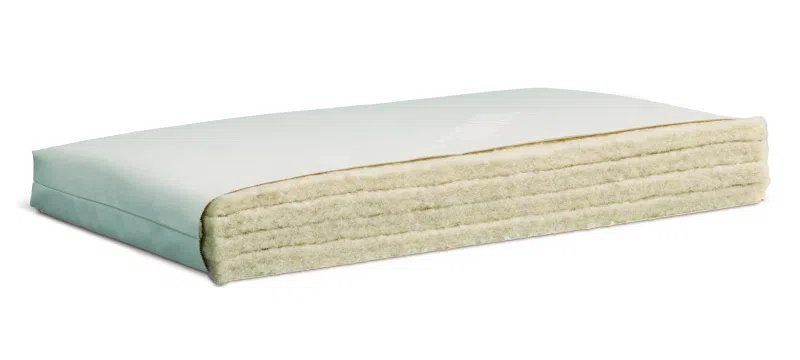
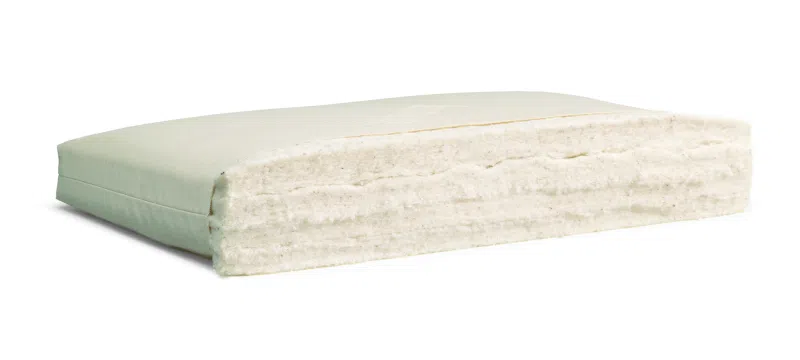
As a basis for your natural mattress, we offer either the basic model A with four layers of pure cotton (organic) and the unquilted cotton cover (organic), or the basic model B with four layers of pure wool (organic) in the cover. Then you add “ingredients” to your futon, for example as shown – a core made of 100% natural latex with a thickness of, for example, 6 cm, covered on both sides with a layer of horsehair for better climate regulation. This core is then placed in the center of the base model, and, as shown in the example, one side of the futon can be equipped with a layer of pure wool (organic) for a cozy winter side – and your very own futon is ready.
Upon request, you can also receive a washable cover as an extra for your futon mattress, which can also be colored.
The Ingredients at a Glance
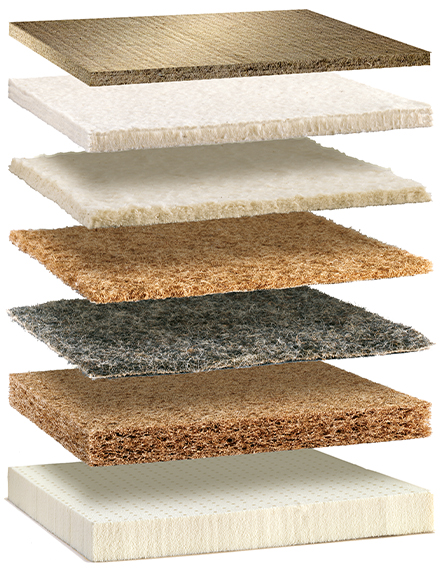
| Hemp | 1,700 g/m2 (Height 1.0) |
| Cotton (organic) | 1,000 g/m2 (Height 1.5) |
| Wool (organic) | 500 g/m2 (Height 1.0) |
| Coconut | 2,000 g/m2 (Height 1.0) |
| Horsehair | 1,000 g/m2 (Height 1.0) |
| Latex-treated Coconut | (Height 2.5) (Height 5.0) |
| Natural Latex | (Height 3.0) (Height 4.0) (Height 6.0) |
FAQ Futons
A futon is not for everyone. But maybe it is exactly right for you. 😉 Here you will find everything you want to know about futons: which materials they contain, who a futon is suitable for, and what distinguishes a futon from a mattress.
What is a futon?
A futon is a sleeping surface. It originally comes from Japan, where it was used directly on the floor and rolled up in the morning. Today, the principle also fits into European bedrooms – just refined and adapted. A modern futon consists of several layers of natural materials such as cotton, coconut fiber, wool, or natural latex. They are carefully stitched together, and the result is a compact, rather firm sleeping surface.
What is the difference between a futon and a natural latex mattress?
The most important difference between futons and mattresses lies in the structure and the lying experience. As already mentioned, a futon has a rather firm sleeping surface. With a futon, you lie more “on” rather than “in” the surface. For many people, this feels pleasantly stable – especially if they like sleeping on their back or prefer a firmer sleeping surface.
A natural latex mattress works differently. It has a continuous latex core that adapts to the body and reacts with point elasticity. This means you sink noticeably in the shoulder and pelvic areas while the torso is stably supported.
A futon offers a rather clear, compact sleeping feeling with little give. The natural latex mattress, on the other hand, reacts more flexibly to the body and adapts individually. Both sleeping systems rely on natural materials, but the lying experience is noticeably different.
Is a futon good for the back?
What is good for your back strongly depends on what your body specifically needs. This is different for everyone. People who are sensitive to pressure, sleep on their side, or already have problems (e.g. with intervertebral discs) may need more cushioning and targeted relief, such as provided by zoned natural latex mattresses.
A futon can be a very good option – especially for people who like to lie firmly, sleep on their back or stomach, and prefer a stable, rather flat lying feeling. There is no deep sinking, but rather an even pressure distribution that can relieve the back muscles.
Therefore, our tip: seek personal advice from a specialist retailer. There, your body will be measured, your sleeping position analyzed, and together it will be determined whether a futon is suitable for you.
Which materials are used in dormiente futons?
➡️ Cotton
Good old cotton is a classic for a reason. It is very skin-friendly, breathable, and helps transport moisture away from the body. At dormiente, only cotton from controlled organic cultivation is used.
➡️ Wool
This wool comes from living sheep that are kept in species-appropriate conditions. Wool is a little natural wonder: it regulates temperature, has antibacterial properties, and even cleans itself to a certain extent.
➡️ Natural latex
Natural latex gives the futon targeted elasticity and comfort. It adapts to individual body points and ensures fine pressure distribution without changing the typically compact futon feeling. It provides slight cushioning without letting you sink in like in a mattress.
➡️ Coconut fiber
Coconut brings structure into play. It provides stability and a pleasantly firm lying feel without being rock hard. In addition, coconut fiber is breathable – perfect for people who tend to get warm at night.
➡️ Hemp
Hemp is often underestimated, but it has a lot to offer. It is antibacterial, extremely durable, and a natural talent when it comes to moisture regulation. Especially in high temperatures or humidity, hemp performs reliably well.
Can futons be used on a normal slatted frame?
In principle: futons need a stable, as continuous as possible base to fully unfold their functionality. The more even the support surface of a futon, the better. Whether a slatted frame is suitable depends on which futon you choose from dormiente – and on which slatted frame it will lie. Not every slatted frame fits every futon.
A visit to dormiente specialist retailers is therefore worthwhile. There you can see which base suits your futon.
How do I properly care for my futon?
A futon is low-maintenance – but it still needs some attention. To keep it in shape for a long time: air it regularly and turn it. Natural materials like cotton, wool, or coconut absorb moisture from the air (and from the body). This moisture must also be released again.
It is best to briefly fold back the bedding in the morning so the futon bed can air out. Every few weeks, you should turn the futon so the filling is evenly distributed and no indentations form.
An additional cover protects the futon surface from dirt and makes care easier. The futon itself does not belong in the washing machine and should not be wet cleaned. Small stains can be treated with a damp cloth.
How long do dormiente futon mattresses last?
The higher the quality of the materials, the longer the futon will last. Our models are made of firm, compressed natural fibers such as coconut, cotton, or natural latex and last up to 10 years. If you regularly air it, turn it from time to time, and provide a suitable base, it will remain stable, shape-retaining, and firmly comfortable.
Are dormiente futons tested for harmful substances?
Yes, all dormiente futons are strictly tested for harmful substances. The cotton comes from controlled organic cultivation, the natural latex as well – and the wool comes from sheep that have more space to roam than many city dwellers. 😉
Where can you buy a dormiente futon?
dormiente futons are not simply available in the next online futon shop – and for good reason. This type of sleeping surface needs to be tried out. That’s why dormiente futons are exclusively available at selected specialist retailers on site.
There you can not only try lying on them but also receive detailed advice on futon sizes, firmness levels, and materials. The specialist retailers take the time to find a futon mattress that truly fits your body and your needs.
In addition, you can ask all questions about healthy sleep, solid wood beds, and natural mattresses. You will also learn the price for your new futon here.